Introduction
Starting a fitness journey can feel overwhelming. With so many workout programs, exercise routines, and fitness trends available, beginners often struggle to know where to begin. The good news is that you don’t need an expensive gym membership or complicated equipment to improve your health and fitness.
Home workouts are one of the easiest and most effective ways to build strength, increase energy, and develop healthy habits. You can exercise at your own pace, in your own space, and on your own schedule.
Whether your goal is to lose weight, improve your overall fitness, build muscle, or simply become more active, this guide will help you get started safely and confidently.
In this article, you’ll learn why home workouts are ideal for beginners, what equipment you need, the best exercises to start with, and how to stay motivated for long-term success.
Quick Start Checklist
- ✔ No gym membership required
- ✔ No equipment needed
- ✔ Beginner-friendly exercises
- ✔ 20-minute workout plan included
- ✔ Easy to follow
Why Home Workouts Are Perfect for Beginners
For many people, walking into a gym for the first time can be intimidating. Busy fitness centers, unfamiliar equipment, and experienced athletes may make beginners feel uncomfortable.
Working out at home removes many of these barriers.
You can learn proper exercise techniques in a relaxed environment without feeling pressured or judged. This allows you to focus on building confidence instead of comparing yourself to others.
Another major advantage is flexibility. Home workouts fit around your schedule, whether you have twenty minutes before work or half an hour in the evening.
Many beginners also discover that exercising at home makes it easier to stay consistent. There is no travel time, no waiting for equipment, and no monthly membership fees.
Most importantly, consistency matters far more than intensity during the first months of your fitness journey.
Developing the habit of exercising three or four times each week will produce better long-term results than attempting difficult workouts that quickly lead to burnout.
Benefits of Exercising at Home
Home workouts provide several advantages that make them ideal for beginners.
Save Time
One of the biggest obstacles to regular exercise is lack of time.
Working out at home eliminates commuting, parking, changing clothes at the gym, and waiting for machines. Even a twenty-minute workout becomes practical during a busy day.
Save Money
Starting a healthier lifestyle doesn’t need to be expensive.
Most beginner workouts rely entirely on bodyweight exercises such as squats, push-ups, bridges, and planks.
As your fitness improves, you can gradually add affordable equipment like resistance bands or dumbbells, but they are not necessary at the beginning.
Exercise Anytime
Morning, afternoon, or evening—the choice is yours.
Without gym opening hours, you can build a routine that fits your lifestyle, making it much easier to stay consistent.
Build Confidence
Every completed workout increases confidence.
Instead of worrying about how others might see you, you can focus on learning correct technique and improving a little each week.
Small improvements eventually become major lifestyle changes.
Create Healthy Habits
Regular exercise is not about finding the perfect workout.
It is about creating a habit that becomes part of your daily routine.
Many successful fitness journeys begin with just fifteen or twenty minutes of movement several times each week.
Those small steps often lead to significant improvements in health, energy levels, and overall well-being.
What You Need Before You Start
One of the best things about home workouts is their simplicity.
You don’t need an expensive home gym to begin exercising.
Before your first workout, prepare a few basic essentials.
Comfortable Clothing
Wear clothes that allow free movement.
Sportswear is helpful but not required. Comfortable shorts, leggings, or a T-shirt work perfectly well.
Choose supportive athletic shoes if you exercise on hard floors. For stretching or yoga-style routines, many people prefer exercising barefoot on a mat.
Water
Keep a bottle of water nearby.
Proper hydration supports performance and helps your body recover after exercise.
Drink water before, during, and after your workout, especially in warm environments.
Small Workout Space
You only need enough room to lie down comfortably and extend your arms.
A clear area of approximately two square meters is sufficient for most beginner exercises.
Remove any objects that could create a tripping hazard before you start.
Exercise Mat (Optional)
An exercise mat makes floor exercises more comfortable, particularly movements such as planks, bridges, and stretching.
If you don’t have one, a carpet or folded towel can work as a temporary alternative.
Positive Mindset
Perhaps the most important thing you need isn’t equipment—it’s patience.
Progress takes time.
Your first workout doesn’t need to be perfect.
The goal is simply to begin.
Every workout builds confidence, improves fitness, and moves you one step closer to a healthier lifestyle.
Best Beginner Home Exercises
One of the biggest advantages of home workouts is that you can build strength and improve fitness using only your body weight. These beginner-friendly exercises require little space, no expensive equipment, and can be adapted to your current fitness level.
Focus on performing each movement slowly and with proper technique. Quality is always more important than speed.
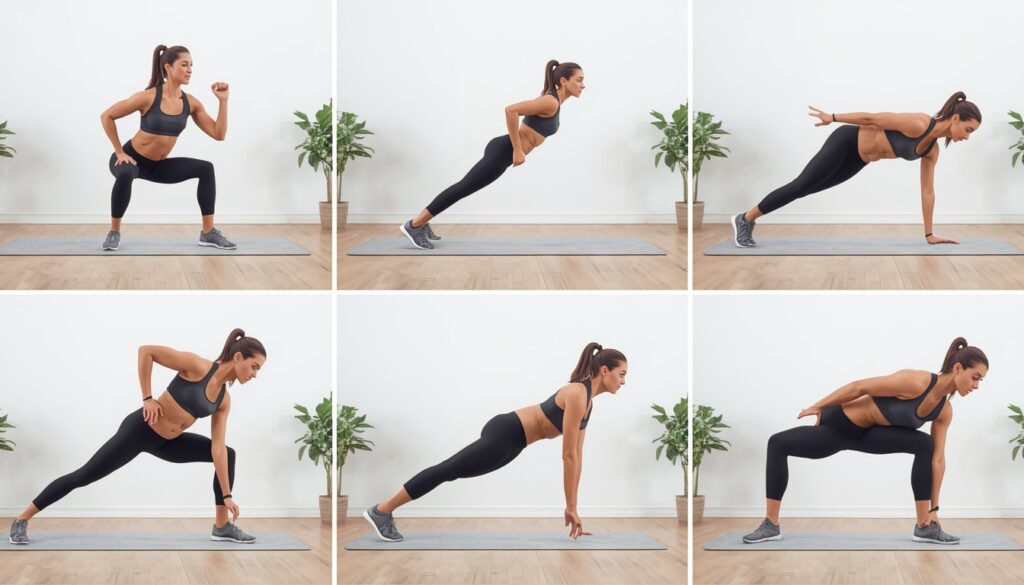
Bodyweight Squats
Bodyweight squats strengthen your legs, hips, and core while improving balance and mobility.
How to do it
- Stand with your feet shoulder-width apart.
- Keep your chest up and your back straight.
- Push your hips backward as if sitting in a chair.
- Lower until your thighs are nearly parallel to the floor.
- Push through your heels to return to the starting position.
Recommended: 10–15 repetitions × 2–3 sets.
Beginner Tip: If squats feel difficult, lower yourself only halfway until your strength improves.
Wall Push-Ups
Wall push-ups are an excellent alternative to traditional push-ups. They strengthen the chest, shoulders, and arms while placing less stress on the joints.
How to do it
- Stand about an arm’s length from a wall.
- Place your hands on the wall at shoulder height.
- Bend your elbows and slowly move your chest toward the wall.
- Push yourself back to the starting position.
Recommended: 10–15 repetitions × 2–3 sets.
Beginner Tip: As you become stronger, progress to incline push-ups using a sturdy bench or table.
Glute Bridges
Glute bridges strengthen the hips, glutes, lower back, and core.
How to do it
- Lie on your back with your knees bent.
- Keep your feet flat on the floor.
- Tighten your glutes and lift your hips until your body forms a straight line.
- Pause briefly before lowering slowly.
Recommended: 12–15 repetitions × 2–3 sets.
Bird Dog
Bird Dog is one of the best beginner exercises for improving balance, posture, and core stability.
How to do it
- Start on your hands and knees.
- Extend your right arm forward while extending your left leg backward.
- Keep your hips level.
- Hold for two seconds.
- Return and repeat on the opposite side.
Recommended: 8–10 repetitions per side.
Modified Plank
The plank develops core strength, which supports nearly every movement in daily life.
How to do it
- Rest on your forearms and knees.
- Keep your body in a straight line.
- Tighten your abdominal muscles.
- Breathe normally throughout the exercise.
Recommended: Hold for 20–30 seconds.
As your strength improves, gradually increase the duration.
Standing Knee Raises
This simple movement improves balance while strengthening the hips, lower abdominal muscles, and legs.
How to do it
- Stand tall with your feet hip-width apart.
- Lift one knee toward your chest.
- Lower it slowly.
- Alternate legs while maintaining good posture.
Recommended: 12 repetitions per leg.
Sample 20-Minute Beginner Home Workout
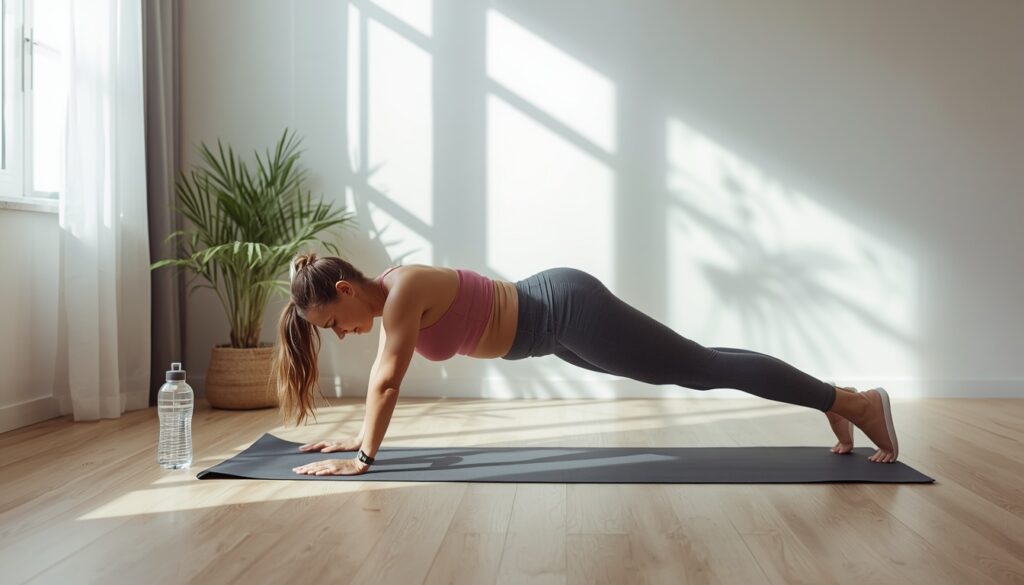
If you’re unsure how to combine these exercises into a complete routine, start with the following beginner-friendly workout.
Warm-Up (5 Minutes)
Prepare your body before exercising with light movements.
- March in place – 1 minute
- Arm circles – 30 seconds forward and backward
- Shoulder rolls – 30 seconds
- Hip circles – 30 seconds
- Bodyweight squats – 10 repetitions
- Gentle leg swings – 1 minute
- Easy walking in place – 1 minute
The goal is to increase your heart rate gradually and loosen your muscles.
Main Workout (12 Minutes)
Complete the following circuit two times.
Circuit
- 10 Bodyweight Squats
- 10 Wall Push-Ups
- 12 Glute Bridges
- 8 Bird Dogs per side
- 20-second Modified Plank
- 12 Standing Knee Raises per leg
Rest for 60–90 seconds between circuits.
Move slowly and focus on proper form rather than speed.
Cool-Down (3 Minutes)
Cooling down helps your heart rate return to normal and reduces muscle stiffness.
Spend about 20–30 seconds on each stretch.
Include:
- Hamstring stretch
- Quadriceps stretch
- Chest stretch
- Shoulder stretch
- Cat-Cow stretch
- Deep breathing
How Often Should Beginners Work Out?
One of the most common questions beginners ask is how many workouts they should do each week.
The answer is simple: consistency matters more than volume.
For most beginners, exercising three times per week is an excellent starting point. This gives your muscles enough time to recover while allowing you to build a sustainable routine.
A simple weekly schedule might look like this:
- Monday: 20-minute home workout
- Wednesday: 20-minute home workout
- Friday: 20-minute home workout
- Tuesday, Thursday, Saturday: Light walking or stretching
- Sunday: Rest and recovery
As your fitness improves, you can gradually increase the number of workouts or extend each session.
Remember that rest days are an important part of progress. Your muscles become stronger during recovery, not just during exercise.
Common Beginner Workout Mistakes
Everyone makes mistakes when starting a new fitness routine. The good news is that most beginner mistakes are easy to avoid once you know what to look for.
Understanding these common pitfalls will help you stay safe, avoid frustration, and make steady progress.
Doing Too Much Too Soon
Many beginners start with too much enthusiasm. They work out every day, perform too many exercises, or choose routines that are far beyond their current fitness level.
While motivation is important, your body needs time to adapt.
Start with three workouts per week and gradually increase the intensity as your strength and endurance improve.
Remember: consistency beats intensity.
Skipping the Warm-Up
It may be tempting to jump straight into your workout, especially when you’re short on time.
However, warming up prepares your muscles and joints for exercise. It increases blood flow, improves mobility, and reduces the risk of injury.
Even five minutes of light movement can make a significant difference.
Ignoring Proper Technique
Good technique is far more important than completing extra repetitions.
Poor form places unnecessary stress on your joints and muscles, increasing the likelihood of injury.
Perform each exercise slowly and under control. If you feel pain rather than normal muscle effort, stop and check your form.
Comparing Yourself to Others
Social media often shows advanced workouts performed by experienced athletes.
It’s easy to feel discouraged when comparing yourself to people who have been training for years.
Instead, compare yourself only to who you were yesterday.
Small improvements every week are what lead to lasting results.
Not Allowing Enough Recovery
Exercise is only one part of becoming healthier.
Recovery is equally important.
Sleep, hydration, balanced nutrition, and rest days allow your muscles to repair and grow stronger.
Don’t feel guilty about taking a day off—it’s part of the process.
How to Stay Motivated
Starting a workout routine is relatively easy.
Sticking with it for months is the real challenge.
Fortunately, there are several simple strategies that can help you stay motivated.
Set Realistic Goals
Instead of focusing only on weight loss or dramatic physical changes, choose goals you can control.
Examples include:
- Complete three workouts each week.
- Exercise for at least 20 minutes.
- Learn proper squat technique.
- Walk 8,000–10,000 steps each day.
Achieving small goals builds confidence and creates momentum.
Schedule Your Workouts
Treat exercise like an important appointment.
Choose specific days and times for your workouts and add them to your calendar.
A consistent schedule makes exercise part of your routine rather than something you do only when you feel motivated.
Track Your Progress
Keep a simple workout journal or use a fitness app.
Record:
- Workout date
- Exercises completed
- Number of repetitions
- Workout duration
- How you felt afterward
Looking back after a few weeks can be incredibly motivating because you’ll clearly see your progress.
Celebrate Small Wins
Every completed workout is an achievement.
Celebrate milestones such as:
- Completing your first week.
- Finishing ten workouts.
- Holding a plank longer.
- Performing more repetitions than before.
Recognizing progress keeps motivation high.
Make Exercise Enjoyable
Choose activities you genuinely enjoy.
Listen to your favorite music, exercise with a family member, or reward yourself after completing your weekly workouts.
Fitness should improve your life—not feel like a punishment.
Frequently Asked Questions
Can I get fit by working out at home?
Yes. Home workouts can improve strength, endurance, flexibility, and overall fitness when performed consistently.
Do I need equipment to start?
No. Most beginner exercises use only your body weight, making them accessible for almost everyone.
How long should a beginner workout last?
A 20–30 minute workout is enough for most beginners. As your fitness improves, you can gradually increase the duration.
Is it okay to work out every day?
Beginners generally benefit from exercising three or four days each week, allowing enough time for recovery between sessions.
What if I miss a workout?
Missing one workout is not a problem.
Simply continue with your next scheduled session instead of trying to “make up” for it.
Consistency over months is far more important than perfection.
When will I start seeing results?
Many beginners notice increased energy and improved mood within the first few weeks.
Visible physical changes often become noticeable after six to twelve weeks of regular exercise, depending on your starting point, nutrition, and consistency.
Final Thoughts
Starting a home workout routine doesn’t require expensive equipment, a gym membership, or previous experience.
What matters most is taking the first step and staying consistent.
By focusing on simple bodyweight exercises, following a realistic workout schedule, and avoiding common beginner mistakes, you’ll build a strong foundation for long-term health and fitness.
Remember that progress isn’t measured by perfection. Every workout, no matter how short, brings you one step closer to a healthier, stronger, and more active lifestyle.
The best workout is the one you actually do.
So roll out your exercise mat, clear a little space, and get started today. Your future self will thank you.
Related Articles
Continue your fitness journey with these beginner-friendly guides:
- 10-Minute Home Workout for Busy People
- Best Home Workout Without Equipment (Complete Beginner Guide)
- No Equipment Home Workout: Full-Body Routine (Coming Soon)
- Weekly Home Workout Plan for Beginners (Coming Soon)
- Best Warm-Up Exercises Before Working Out at Home (Coming Soon)
- Common Home Workout Mistakes and How to Avoid Them (Coming Soon)
As new articles are published, update this section with internal links to help readers explore related topics and strengthen your site’s SEO.
Pingback: Lower Body Home Workout for Beginners | Simple Guide