Introduction
Many people believe they need expensive gym equipment to get stronger, lose weight, or improve their fitness. In reality, some of the most effective workouts require nothing more than your own body weight.
A home workout without equipment is one of the easiest and most affordable ways to stay active. You can exercise almost anywhere, whether you’re at home, traveling, or spending time outdoors. There are no monthly gym fees, no machines to learn, and no special gear required.
Bodyweight exercises help improve strength, balance, flexibility, and endurance while teaching your body to move naturally. They are especially suitable for beginners because most movements can be adjusted to match your current fitness level.
In this guide, you’ll discover why equipment-free workouts are so effective, learn the best bodyweight exercises for beginners, and follow a complete workout routine that you can start today.
If you’re just beginning your fitness journey, we also recommend reading our Home Workouts for Beginners: Complete Guide to Getting Started. And if you’re short on time, don’t miss our 10-Minute Home Workout for Busy People, which is perfect for busy schedules.
Quick Start Checklist
✅ No equipment required
✅ Beginner-friendly exercises
✅ Full-body workout
✅ Suitable for small spaces
✅ Improve strength and mobility
✅ Easy to follow
Why You Don’t Need Equipment to Get Fit
One of the biggest myths about fitness is that better equipment leads to better results.
While dumbbells, resistance bands, and gym machines can be useful, they are not essential for building a healthier body.
Your own body provides enough resistance to improve muscular strength, coordination, and endurance—especially if you’re just getting started.
Bodyweight exercises also teach functional movement patterns that you use every day, such as squatting, pushing, pulling, balancing, and bending.
Unlike many gym machines, these movements improve the way your body performs during everyday activities.
Another major advantage is convenience.
Without equipment, there are no excuses about missing a workout because you forgot your gear or don’t have access to a gym.
You can exercise in your living room, bedroom, hotel room, or even outside in a park.
Consistency becomes much easier when your workout is always available.
Benefits of Bodyweight Workouts
Training without equipment offers many advantages beyond convenience.
Save Money
One of the greatest benefits is cost.
You don’t need a gym membership or expensive home fitness equipment to get started.
Everything you need is already with you.
Exercise Anywhere
Bodyweight workouts can be performed almost anywhere.
Whether you’re at home, on vacation, or traveling for work, your fitness routine doesn’t have to stop.
Improve Functional Strength
Unlike many machine-based exercises, bodyweight movements train several muscle groups at once.
This helps improve coordination, balance, posture, and everyday strength.
Suitable for Every Fitness Level
Nearly every bodyweight exercise has an easier and more challenging variation.
Beginners can start with simple movements, while more experienced people can increase the difficulty as they become stronger.
This makes bodyweight training a long-term fitness solution rather than a temporary beginner program.
Lower Risk of Injury
When performed with proper technique, bodyweight exercises generally place less stress on the joints than lifting heavy weights.
They encourage controlled movement and better body awareness, helping beginners develop good exercise habits from the start.
What You’ll Need
One of the best things about equipment-free workouts is their simplicity.
Before you begin, prepare just a few essentials.
Comfortable Clothing
Wear clothes that allow you to move freely without restricting your movements.
Athletic shoes are recommended for better stability, especially if you’re exercising on hard floors.
Small Workout Space
A space of about two square meters is enough for most bodyweight exercises.
Move any furniture or objects that could get in your way.
Water
Keep a bottle of water nearby and stay hydrated throughout the day.
Good hydration supports both performance and recovery.
A Positive Mindset
Don’t worry about being perfect.
Focus on completing today’s workout and building consistency over time.
Every workout, no matter how short, is another step toward better health.
Best No-Equipment Exercises
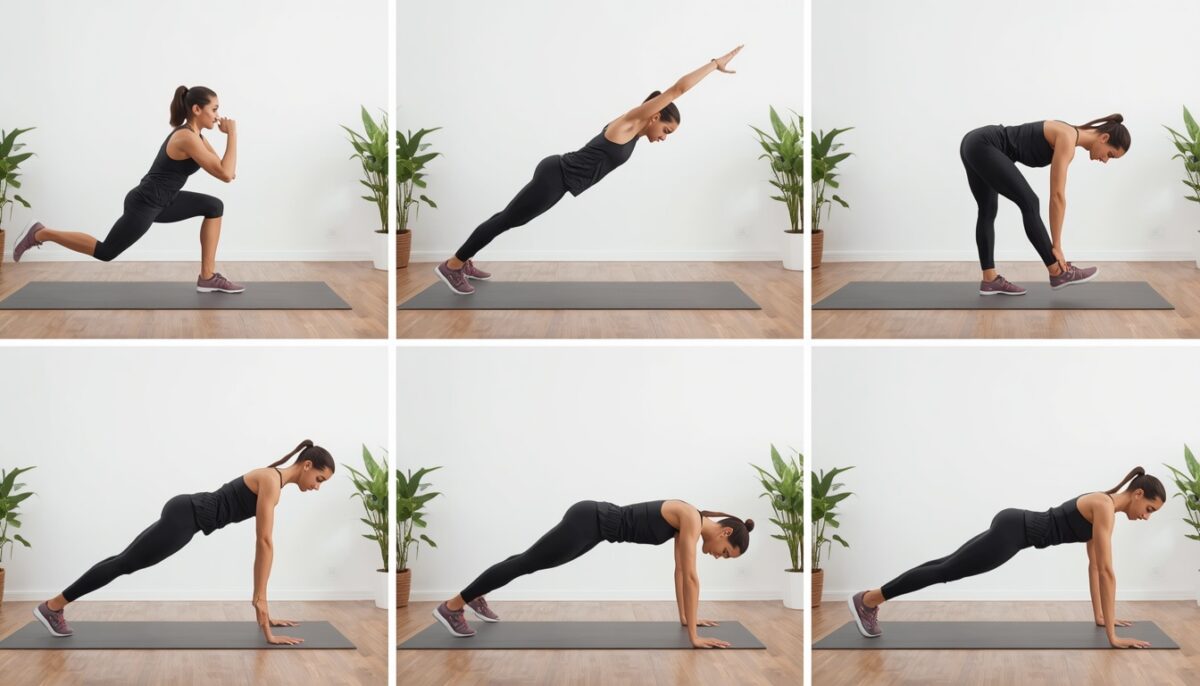
One of the biggest advantages of bodyweight training is that a few simple exercises can work your entire body.
The following movements are beginner-friendly, require no equipment, and help build strength, improve balance, and increase mobility.
Focus on slow, controlled movements and proper technique rather than speed.
Bodyweight Squats
Bodyweight squats strengthen your legs, glutes, and core while improving balance and lower-body mobility.
How to Perform
- Stand with your feet shoulder-width apart.
- Keep your chest up and your back straight.
- Push your hips backward as if sitting in a chair.
- Lower until your thighs are almost parallel to the floor.
- Push through your heels to return to the starting position.
Recommended: 12–15 repetitions.
Beginner Tip: If full squats feel difficult, lower yourself only halfway until your strength improves.
Wall Push-Ups
Wall push-ups are an excellent way to build upper-body strength before progressing to standard push-ups.
How to Perform
- Stand facing a wall.
- Place your hands slightly wider than shoulder-width apart.
- Bend your elbows slowly.
- Bring your chest toward the wall.
- Push yourself back to the starting position.
Recommended: 10–15 repetitions.
Beginner Tip: Move your feet farther from the wall to increase the difficulty.
Glute Bridges
Glute bridges strengthen the glutes, hips, lower back, and core.
How to Perform
- Lie on your back with your knees bent.
- Place your feet flat on the floor.
- Tighten your glutes.
- Lift your hips until your body forms a straight line.
- Lower slowly.
Recommended: 12–15 repetitions.
Bird Dog
Bird Dog improves posture, coordination, balance, and core stability.
How to Perform
- Start on your hands and knees.
- Extend your right arm forward.
- Extend your left leg backward.
- Hold for two seconds.
- Return slowly.
- Repeat on the opposite side.
Recommended: 8–10 repetitions per side.
Modified Plank
The modified plank strengthens your core while protecting the lower back.
How to Perform
- Rest on your forearms and knees.
- Tighten your abdominal muscles.
- Keep your body in a straight line.
- Breathe normally throughout the exercise.
Recommended: Hold for 20–30 seconds.
Standing Knee Raises
Standing knee raises improve balance while strengthening the hips and abdominal muscles.
How to Perform
- Stand upright.
- Lift one knee toward your chest.
- Lower it slowly.
- Repeat with the opposite leg.
Recommended: 12 repetitions per leg.
Complete Home Workout Without Equipment
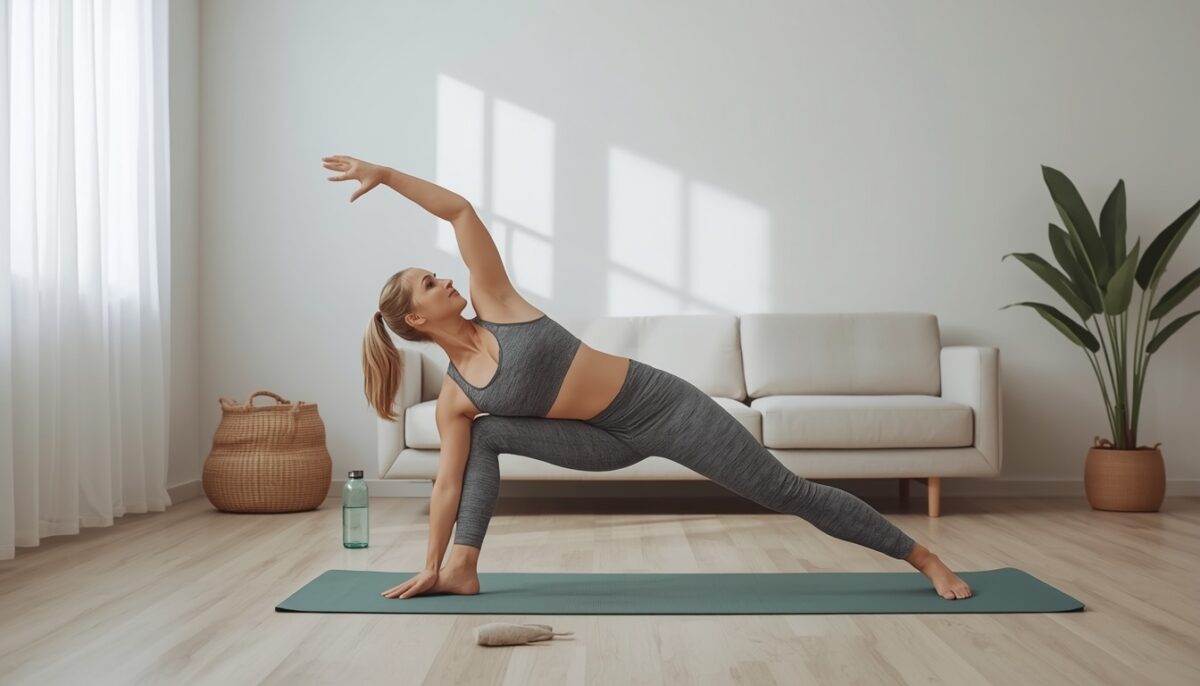
You can combine the exercises above into a simple full-body routine that takes about 20 minutes to complete.
This workout is suitable for beginners and requires only a small amount of space.
Warm-Up (5 Minutes)
Never skip your warm-up.
Preparing your muscles before exercise improves performance and helps reduce the risk of injury.
Perform each movement for approximately 30–45 seconds.
Warm-up routine:
- March in place
- Arm circles
- Shoulder rolls
- Hip circles
- Bodyweight squats
- Gentle leg swings
- Walking in place
Main Workout (12 Minutes)
Complete the following circuit two times.
- 12 Bodyweight Squats
- 10 Wall Push-Ups
- 12 Glute Bridges
- 8 Bird Dogs per side
- 20–30 Second Modified Plank
- 12 Standing Knee Raises per leg
Rest for 60–90 seconds after completing each circuit.
Move slowly and focus on good technique.
As your fitness improves, you can increase the number of repetitions or complete three circuits instead of two.
Cool-Down (3 Minutes)
Cooling down allows your heart rate to return to normal and helps reduce muscle stiffness.
Hold each stretch for approximately 20 seconds.
Include:
- Hamstring stretch
- Chest stretch
- Shoulder stretch
- Hip flexor stretch
- Cat-Cow stretch
- Deep breathing
A proper cool-down leaves you feeling refreshed and supports recovery after your workout.
Why This Workout Works
Many beginners think they need dozens of different exercises to get results.
In reality, a small number of well-chosen movements can effectively train your entire body.
This workout includes exercises that target your:
- Legs
- Glutes
- Chest
- Shoulders
- Core
- Lower back
- Balance
- Mobility
By repeating these exercises consistently, you’ll gradually improve your strength, endurance, posture, and overall fitness without needing any special equipment.
Tips for Better Results
Getting fit without equipment is not about finding the perfect workout—it’s about staying consistent and making exercise a regular part of your routine.
The following tips will help you achieve better results while reducing the risk of injury.
Be Consistent
Aim to exercise at least three or four times per week.
A short workout performed regularly is far more effective than an occasional long session.
Building a consistent routine is the foundation of long-term fitness success.
Focus on Proper Technique
Perform each exercise slowly and with control.
Good technique activates the correct muscles and helps prevent unnecessary strain on your joints.
If you’re unsure about an exercise, reduce the number of repetitions and concentrate on performing each movement correctly.
Progress Gradually
As your fitness improves, challenge yourself by:
- Performing more repetitions.
- Completing an additional circuit.
- Holding planks for longer.
- Reducing rest periods.
Small improvements over time lead to significant long-term progress.
Stay Hydrated
Drink water before, during, and after your workout.
Proper hydration supports muscle function, improves recovery, and helps maintain energy throughout the day.
Combine Exercise with Healthy Habits
Exercise works best when combined with healthy nutrition, quality sleep, and regular movement throughout the day.
Simple daily habits create lasting results.
Common Mistakes
Many beginners unknowingly make mistakes that slow their progress.
Fortunately, these mistakes are easy to avoid.
Skipping the Warm-Up
Preparing your muscles before exercising reduces the risk of injury and improves performance.
Even five minutes of light movement makes a difference.
Using Poor Technique
Completing more repetitions with incorrect form is less effective than performing fewer repetitions correctly.
Always prioritize quality over quantity.
Doing Too Much Too Soon
It’s natural to feel motivated when starting a new routine.
However, exercising too intensely during the first few weeks often leads to soreness, fatigue, or injury.
Increase the difficulty gradually.
Ignoring Recovery
Your muscles become stronger during recovery.
Make sure you get enough sleep and allow your body time to rest between workouts.
Frequently Asked Questions
Can I build muscle without equipment?
Yes.
Bodyweight exercises can effectively build strength and muscle, especially for beginners.
As you become stronger, you can increase the difficulty by changing exercise variations or adding more repetitions.
How often should I do this workout?
Three to five sessions per week are ideal for most beginners.
This provides a good balance between training and recovery.
How long does it take to see results?
Many people notice increased energy and improved fitness within the first few weeks.
Visible physical changes usually appear after several weeks of consistent training.
Do I need a large space?
No.
Most bodyweight workouts require only a small area where you can comfortably stretch your arms and legs.
Is this workout suitable for older adults?
In many cases, yes.
However, anyone with existing medical conditions or mobility limitations should consult a healthcare professional before starting a new exercise program.
Final Thoughts
You don’t need expensive equipment or a gym membership to improve your health and fitness.
Your own body provides everything you need to begin building strength, improving mobility, and creating healthier daily habits.
The most important step is simply getting started.
Focus on consistency rather than perfection, follow proper technique, and gradually challenge yourself as your fitness improves.
Remember that every workout—no matter how short—moves you one step closer to a stronger, healthier, and more active lifestyle.
Start today, stay committed, and enjoy the long-term benefits of regular movement.
Related Articles
Continue your fitness journey with these helpful guides:
- Home Workouts for Beginners: Complete Guide to Getting Started
- 10-Minute Home Workout for Busy People
- Weekly Home Workout Plan for Beginners (Coming Soon)
- Best Warm-Up Exercises Before Working Out at Home (Coming Soon)
- How to Stay Motivated to Exercise at Home (Coming Soon)
Pingback: Lower Body Home Workout for Beginners | Simple Guide