Introduction
Starting a new workout routine can be difficult when you don’t know exactly what to do each day. Many beginners start with random exercises, follow different workout videos, or exercise too hard during the first few days.
A simple weekly plan can make the process much easier.
Instead of deciding what to do every time you exercise, you can follow a structured routine that gives your body enough movement while also allowing time for recovery.
A weekly home workout plan for beginners does not need to be complicated. You can build an effective routine using bodyweight exercises, short workout sessions, and a small amount of space at home.
The goal is not to exercise as much as possible. The goal is to create a routine that you can realistically maintain week after week.
If you’re completely new to exercising, start with our Home Workouts for Beginners: Complete Guide to Getting Started. It explains the basics of exercising at home and how to approach your first workouts safely and consistently.
For people with busy schedules, short sessions can also be extremely useful. Our 10-Minute Home Workout for Busy People shows how even a limited amount of time can be used for regular exercise.
This guide will give you a simple weekly structure that you can adjust to your fitness level and daily schedule.
Why Follow a Weekly Workout Plan?
Having a plan removes much of the guesswork from exercising.
When you know what workout you are going to do each day, it becomes easier to stay consistent. You don’t have to spend time searching for exercises or wondering whether you should train your legs, upper body, or core.
A weekly plan also helps you avoid doing too much too soon.
Beginners sometimes believe that exercising every day will produce faster results. In reality, your body needs time to recover between more demanding sessions.
A balanced routine combines exercise days with lighter activity and rest.
Build Consistency
Consistency is one of the most important factors in developing better fitness.
You don’t need to complete long workouts every day. A manageable routine performed several times per week is much easier to maintain than an intense program that quickly becomes exhausting.
For example, exercising on Monday, Wednesday, Friday, and Saturday may be more realistic than attempting a difficult workout seven days a week.
The exact schedule is less important than choosing a routine that fits your lifestyle.
Allow Time for Recovery
Rest is part of a successful workout plan.
During exercise, your muscles are challenged. Recovery gives your body time to adapt and become stronger.
Rest days don’t necessarily mean doing nothing. You can use them for walking, gentle stretching, mobility exercises, or other light activities.
Create a Simple Routine
A beginner workout plan should be easy to understand.
You don’t need dozens of different exercises. A small selection of movements can train your legs, upper body, core, and cardiovascular system effectively.
Keeping the routine simple also makes it easier to remember and repeat.
How Many Days Should Beginners Exercise?
For most beginners, three to four workout sessions per week provide a practical starting point.
This gives you enough opportunities to exercise while leaving recovery days between more demanding sessions.
Your schedule can also depend on the type of exercise you perform.
A short bodyweight workout may require less recovery than a demanding full-body session. Your current fitness level, age, daily activity, and previous exercise experience also matter.
The important thing is to start at a level that feels manageable.
If you finish every workout completely exhausted, the routine may be too difficult.
Instead, you should gradually increase the challenge as your fitness improves.
Three-Day Beginner Schedule
A simple three-day schedule could look like this:
Monday: Full-body workout
Tuesday: Rest or light walking
Wednesday: Full-body workout
Thursday: Rest or mobility
Friday: Full-body workout
Saturday: Optional light activity
Sunday: Rest
This approach gives you regular exercise without requiring you to work out every day.
Four-Day Beginner Schedule
If you already feel comfortable exercising regularly, you can use a four-day schedule:
Monday: Full-body workout
Tuesday: Light cardio or walking
Wednesday: Rest
Thursday: Full-body workout
Friday: Rest
Saturday: Full-body workout
Sunday: Light activity or rest
You can adjust these days depending on your work schedule and personal commitments.
7-Day Home Workout Plan for Beginners

A weekly workout plan should give you enough variety to keep your body active while still allowing enough time for recovery.
The following seven-day schedule is designed for beginners who want to exercise at home without complicated equipment.
You can adjust the number of repetitions, workout duration, and rest periods according to your current fitness level.
The most important thing is to complete the movements with good technique and avoid pushing yourself beyond your limits.
Day 1 – Full-Body Strength Workout
Start the week with a simple full-body workout.
The goal is to activate the major muscle groups and establish a comfortable training rhythm.
Try the following exercises:
- Bodyweight squats – 12 repetitions
- Wall push-ups – 10 repetitions
- Glute bridges – 12 repetitions
- Bird dogs – 8 repetitions per side
- Standing knee raises – 10 repetitions per leg
- Modified plank – 20 seconds
Complete the circuit two times.
Rest for approximately 60–90 seconds between circuits.
If you are completely new to exercise, one circuit may be enough during your first few sessions.
Day 2 – Walking and Light Movement
Day two is focused on lighter activity.
You do not need another intense workout.
A 20–30 minute walk can help you stay active while giving your muscles time to recover from the previous day’s workout.
If you cannot go outside, walk around your home or perform gentle movements such as marching in place.
You can also spend five to ten minutes doing simple mobility exercises.
The goal is to keep your body moving without creating significant fatigue.
Day 3 – Lower-Body and Core Workout
On the third day, focus on your legs, hips, and core.
Try:
- Bodyweight squats – 12 repetitions
- Glute bridges – 15 repetitions
- Standing knee raises – 12 per leg
- Bird dogs – 8 per side
- Modified plank – 20–30 seconds
Complete two rounds.
Move slowly and concentrate on maintaining control throughout every repetition.
If your legs feel tired after Day 1, reduce the number of repetitions rather than skipping proper technique.
Day 4 – Rest and Recovery
Take a full rest day.
Rest does not mean that you have failed to follow your fitness plan.
Recovery is an important part of improving your fitness.
You can still perform normal daily activities or take a gentle walk if you feel comfortable.
Avoid turning your recovery day into another demanding workout.
Day 5 – Full-Body Workout
Return to a full-body workout.
Use the same basic exercises from Day 1, but focus on improving your technique.
Try:
- Bodyweight squats – 12–15 repetitions
- Wall push-ups – 10–12 repetitions
- Glute bridges – 15 repetitions
- Bird dogs – 10 per side
- Standing knee raises – 12 per leg
- Modified plank – 25–30 seconds
Complete two rounds.
If this feels comfortable, you can add a third round.
However, there is no need to increase the difficulty immediately.
Day 6 – Optional Cardio or Active Day
Day six can be flexible.
Choose an activity you enjoy.
You could take a longer walk, ride a bicycle, perform light dancing, or complete an easy mobility routine.
The goal is to stay active without exhausting yourself.
If you feel tired from the previous workouts, simply use this day as another recovery day.
Listening to your body is especially important when you are just beginning.
Day 7 – Rest and Prepare for the Next Week
Finish the week with another rest day.
Take a few minutes to think about how the week went.
Ask yourself:
- Which exercises felt comfortable?
- Which movements were difficult?
- Did you have enough recovery time?
- Which days were easiest to fit into your schedule?
Use these observations to adjust the following week.
A successful workout plan should fit your life rather than making your life revolve around exercise.
If you prefer a simpler three-day schedule, our 3-Day Home Workout Plan for Beginners provides a practical routine you can follow at home.
How to Adjust the Plan to Your Fitness Level
Not every beginner starts from the same point.
Someone who has been inactive for several years may need a much easier routine than someone who already walks or participates in recreational activities regularly.
There is nothing wrong with starting slowly.
If You’re Completely New to Exercise
Begin with one circuit instead of two.
Keep workouts between 10 and 15 minutes and focus primarily on learning the correct movements.
As your confidence improves, gradually increase the duration and number of repetitions.
If the Workout Feels Too Easy
You can gradually increase the challenge.
Try adding a few repetitions, completing an additional round, or extending the duration of exercises such as the modified plank.
Another option is to use more challenging variations of familiar movements.
Make only one change at a time so you can see how your body responds.
How to Progress from Week to Week
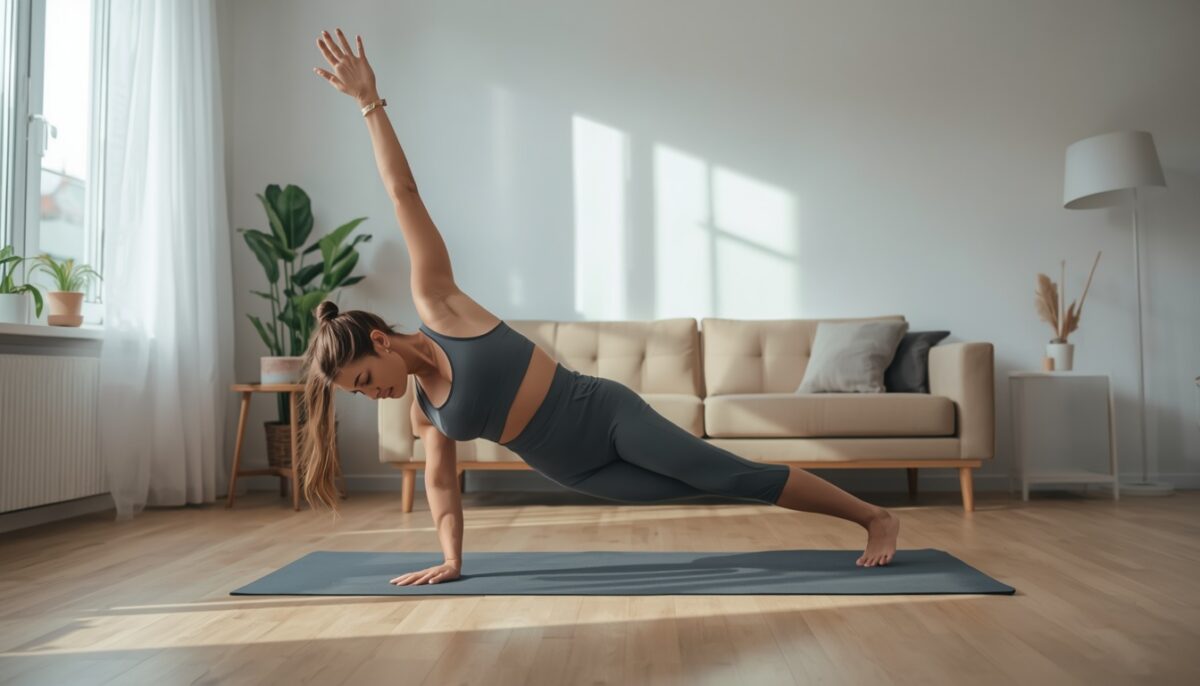
The first week of a new workout routine should focus on learning the exercises and creating a consistent habit.
You do not need to make every workout harder immediately.
Once the routine starts feeling comfortable, you can gradually increase the challenge.
A simple approach is to change only one element at a time.
You might add a few repetitions, increase the duration of an exercise, complete an additional circuit, or reduce your rest periods slightly.
The key word is gradually.
Your body needs time to adapt to increased physical demands.
Increase Repetitions
If you can comfortably complete 10 repetitions of an exercise, try increasing the number to 12 or 15 during a future workout.
Small increases are easier to manage than suddenly doubling the workload.
Increase Workout Duration
You can also make your workouts slightly longer.
For example, if you currently exercise for 15 minutes, increase your next sessions to 18 or 20 minutes.
There is no need to turn a short beginner workout into a one-hour session.
Try More Challenging Variations
As your strength improves, basic exercises may eventually become too easy.
At that point, you can move from wall push-ups to incline push-ups or from modified planks to a standard plank.
Progress should always match your current ability.
Warm-Up and Cool-Down
A good weekly workout plan should include more than the main exercises.
Warming up prepares your body for movement, while cooling down gives you time to gradually return to a resting state.
You don’t need a complicated warm-up routine.
Five minutes of light movement is usually enough to get started.
Simple Warm-Up Routine
Before your workout, try:
- Marching in place
- Arm circles
- Shoulder rolls
- Hip circles
- Gentle leg swings
- Easy bodyweight squats
Start slowly and gradually increase your movement.
If any movement causes pain, stop and choose a more comfortable alternative.
Simple Cool-Down Routine
After exercising, spend a few minutes walking slowly or performing gentle stretches.
You can stretch your:
- Hamstrings
- Calves
- Chest
- Shoulders
- Hip flexors
Keep the movements comfortable rather than forcing a deep stretch.
How to Stay Consistent with Your Workout Plan
Knowing what to do is only part of the process.
The bigger challenge for many beginners is continuing the routine after the initial motivation disappears.
The best workout plan is one you can maintain over time.
Choose a Regular Workout Time
Try exercising at approximately the same time on your workout days.
For some people, mornings work best.
Others prefer exercising after work or in the evening.
There is no universally perfect time.
Choose the time that fits naturally into your daily schedule.
Keep Your Workouts Simple
Avoid constantly changing your routine.
Repeating familiar exercises allows you to learn proper technique and track your progress more easily.
You can introduce new exercises gradually without rebuilding your entire plan every week.
Prepare in Advance
Place your workout clothes somewhere easy to find.
Keep your exercise area clear.
Have a bottle of water nearby.
These small preparations remove unnecessary barriers when it is time to exercise.
Focus on Progress, Not Perfection
Missing one workout does not mean your entire plan has failed.
Life can become busy.
You may have work responsibilities, family commitments, travel, or simply a day when you don’t feel your best.
Instead of abandoning the routine, return to it at the next available opportunity.
Consistency over several months matters much more than completing every single planned session.
Common Mistakes Beginners Should Avoid
A weekly workout plan is most effective when it is realistic.
Avoiding common mistakes can help you build a routine that is easier to maintain.
Exercising Too Hard
One of the most common beginner mistakes is trying to do too much too quickly.
Extreme soreness is not a requirement for making progress.
Your workouts should challenge you, but they should also remain manageable.
Skipping Rest Days
More exercise is not always better.
Recovery allows your body to adapt to training.
If you constantly feel exhausted or unusually sore, consider reducing your workout frequency or intensity.
Ignoring Pain
Normal muscle fatigue is different from pain.
If an exercise causes sharp, severe, or persistent pain, stop performing it.
Do not attempt to push through pain simply because it is part of your workout plan.
If you have health concerns or an existing injury, speak with an appropriate healthcare professional before starting or changing an exercise routine.
Frequently Asked Questions
Is a weekly home workout plan enough to get fit?
Yes.
A consistent home workout routine can improve strength, endurance, mobility, balance, and overall fitness.
Your results will depend on factors such as exercise consistency, intensity, nutrition, sleep, and your starting fitness level.
Can beginners work out at home every day?
You can remain active every day, but you don’t need to perform an intense workout every day.
A better approach is to combine strength workouts with walking, mobility exercises, and rest days.
How long should a beginner workout last?
There is no single perfect duration.
A beginner can start with 10–20 minutes and gradually increase workout time as fitness improves.
Even a short workout can be useful when performed consistently.
Do I need equipment for this weekly workout plan?
No.
The exercises in this plan can be performed using your body weight.
As you become more experienced, you may choose to add resistance bands or dumbbells, but they are not necessary for getting started.
Final Thoughts
A good weekly home workout plan should make exercise easier, not more complicated.
You don’t need an expensive gym membership, advanced equipment, or long daily workouts to begin improving your fitness.
Start with a manageable schedule, learn the basic movements, and give your body enough time to recover.
As the weeks pass, gradually increase the challenge and pay attention to how your body responds.
Most importantly, focus on building a routine that fits your everyday life.
A simple plan followed consistently can become the foundation for long-term fitness and healthier habits.
Important: This article is for general informational purposes only and is not a substitute for professional medical advice. If you have an existing health condition, injury, or concerns about starting a new exercise routine, consult a qualified healthcare professional before exercising.
Related Articles
If you want to continue building your home workout routine, explore these guides:
- Home Workouts for Beginners: Complete Guide to Getting Started
- 10-Minute Home Workout for Busy People
- Best Home Workout Without Equipment (Complete Beginner Guide)
These articles provide additional beginner-friendly ideas that can complement the weekly schedule in this guide.