Introduction
Finding time to exercise isn’t always easy. Between work, family responsibilities, commuting, and daily tasks, many people believe they simply don’t have enough time to stay active.
The good news is that you don’t need to spend an hour at the gym to improve your fitness. Even a short, well-planned workout can help you build strength, increase energy, and support your overall health.
A 10-minute home workout is perfect for busy people because it removes many of the common barriers to exercise. You don’t need expensive equipment, a large workout space, or advanced fitness experience. All you need is a few minutes of your day and the willingness to get started.
This guide will show you why short workouts are effective, how to make the most of your time, and which exercises provide the greatest benefits for beginners.
If you’re completely new to exercising, check out our guide, Home Workouts for Beginners: Complete Guide to Getting Started, where you’ll learn the basics of building a safe and consistent fitness routine.
Quick Start Checklist
✅ Beginner-friendly routine
✅ Only 10 minutes
✅ No gym required
✅ No expensive equipment
✅ Full-body workout
✅ Easy to follow
Why 10 Minutes Can Make a Difference
Many people believe that effective workouts must last at least an hour. In reality, consistency is far more important than workout length.
A well-designed 10-minute routine can increase your heart rate, activate major muscle groups, improve mobility, and help establish a healthy daily habit.
Short workouts are also much easier to fit into a busy schedule. Instead of skipping exercise because you don’t have an hour available, you can complete a quick session before work, during lunch, or in the evening.
Another advantage is that shorter workouts are less intimidating. Beginners often feel overwhelmed by long exercise programs, while ten minutes feels achievable even on the busiest days.
Over time, these small daily efforts add up to meaningful improvements in strength, endurance, and overall fitness.
The most successful fitness routines are not necessarily the longest—they are the ones you can maintain consistently.
Benefits of Short Daily Workouts
Although ten minutes may seem like a small amount of time, regular short workouts provide many important health benefits.
Easier to Build a Habit
Creating a new habit is often easier when the commitment feels manageable.
A 10-minute workout is much easier to complete consistently than a one-hour session, especially for beginners.
Once exercise becomes part of your daily routine, increasing the duration later becomes much easier.
Improved Energy Levels
Many people expect exercise to make them feel tired.
In reality, regular physical activity often has the opposite effect.
Short workouts improve blood circulation, increase oxygen delivery throughout the body, and help reduce feelings of fatigue during the day.
Many people notice that they feel more focused and productive after just a few minutes of movement.
Supports Weight Management
While a single 10-minute workout won’t burn hundreds of calories, regular daily exercise contributes to your overall energy expenditure.
Combined with healthy eating habits, short workouts can play an important role in achieving and maintaining a healthy body weight.
Reduces Stress
Exercise stimulates the release of endorphins, often called the body’s “feel-good” hormones.
Even a brief workout can help reduce stress, improve mood, and provide a mental break from work or daily responsibilities.
Suitable for Almost Everyone
One of the greatest strengths of short home workouts is their flexibility.
Whether you’re a beginner, returning to exercise after a break, or simply trying to stay active despite a busy schedule, a 10-minute routine can be adjusted to match your current fitness level.
You can perform the exercises at your own pace and gradually increase the intensity as your confidence grows.
What You’ll Need
One of the best things about this workout is its simplicity.
You probably already have everything you need at home.
Comfortable Clothing
Choose clothes that allow you to move freely and comfortably.
Supportive athletic shoes are recommended if you’re exercising on a hard floor, while a yoga mat can make floor exercises more comfortable.
Small Workout Space
You only need enough room to stretch your arms and legs safely.
A clear area in your living room, bedroom, or office is usually more than enough.
Water Bottle
Keep water nearby and stay hydrated before and after your workout.
Proper hydration supports performance and recovery.
Positive Attitude
The goal of this workout is not perfection.
The goal is simply to move your body for ten minutes.
Some days you’ll feel stronger than others, and that’s perfectly normal.
Consistency matters far more than having the perfect workout every single day.
Complete 10-Minute Home Workout Routine
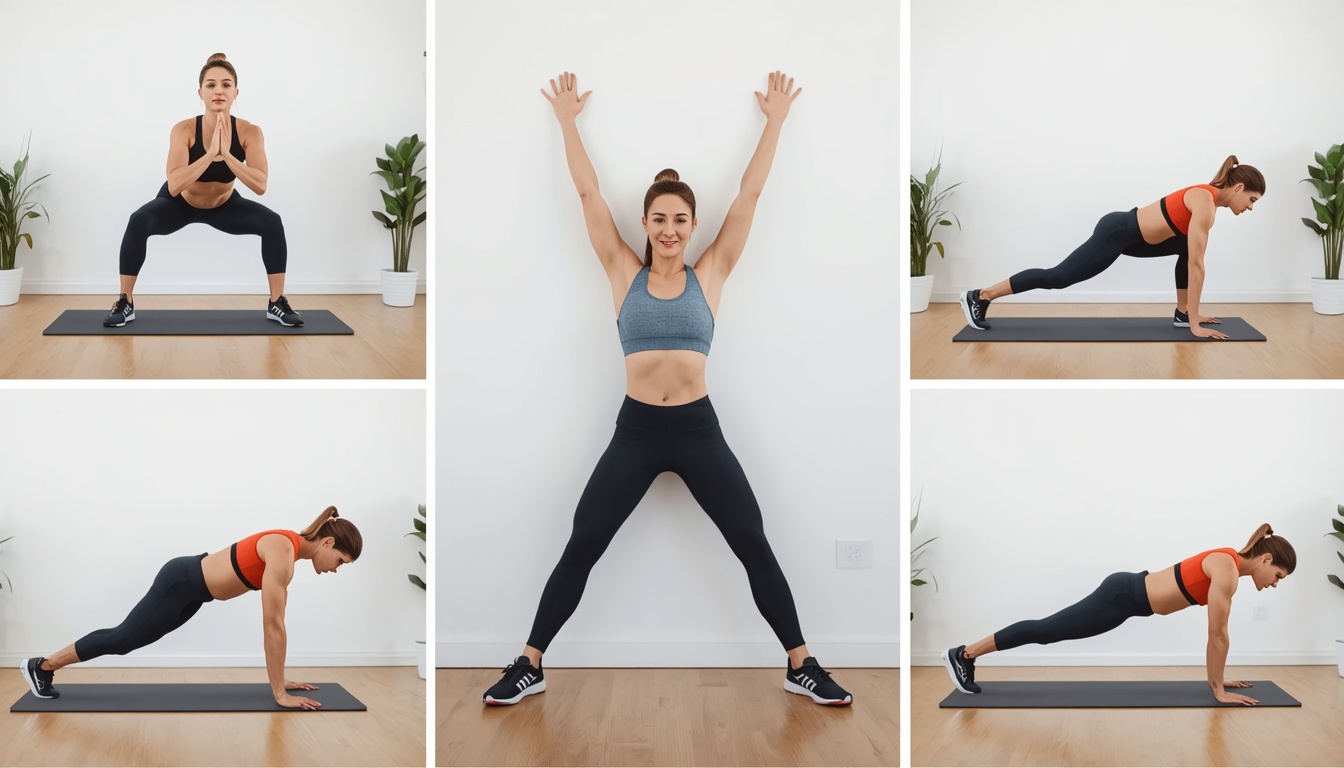
Example of a simple 10-minute full-body home workout routine for beginners.
This routine is designed for beginners and busy people who want to improve their fitness in just ten minutes.
The workout targets all major muscle groups while helping improve strength, balance, and mobility.
Perform each exercise with controlled movements and focus on proper technique rather than speed.
If you need a short break, pause for 15–20 seconds before continuing.
Warm-Up (2 Minutes)
Never skip your warm-up, even if you’re exercising for only ten minutes.
A short warm-up prepares your muscles, increases blood flow, and helps reduce the risk of injury.
Complete the following movements continuously for two minutes.
March in Place
March gently while swinging your arms naturally.
This raises your heart rate and prepares your body for movement.
Duration: 30 seconds
Arm Circles
Extend both arms out to the sides.
Make small circles forward for 15 seconds, then backward for another 15 seconds.
This helps loosen the shoulders and improve mobility.
Bodyweight Squats
Perform slow, controlled squats without rushing.
Focus on good posture and smooth movement.
Repetitions: 10
Shoulder Rolls
Roll your shoulders forward five times, then backward five times.
Release any tension in your upper body before beginning the workout.
Main Workout (7 Minutes)
Complete the following circuit twice.
Perform each exercise for 40 seconds, followed by 20 seconds of rest before moving to the next exercise.
Bodyweight Squats
Squats strengthen your legs, glutes, and core while improving balance and mobility.
How to Perform
- Stand with your feet shoulder-width apart.
- Keep your chest lifted.
- Push your hips backward.
- Lower until your thighs are almost parallel to the floor.
- Return to standing by pushing through your heels.
Beginner Tip
If full squats are difficult, lower only halfway until your strength improves.
Wall Push-Ups
Wall push-ups are an excellent starting point for building upper-body strength.
How to Perform
- Stand facing a wall.
- Place your hands at shoulder height.
- Bend your elbows slowly.
- Bring your chest toward the wall.
- Push back to the starting position.
Beginner Tip
The farther your feet are from the wall, the more challenging the exercise becomes.
Glute Bridges
This exercise strengthens the hips, glutes, lower back, and core.
How to Perform
- Lie on your back.
- Bend your knees.
- Place both feet flat on the floor.
- Lift your hips until your body forms a straight line.
- Lower slowly.
Beginner Tip
Avoid arching your lower back.
Focus on squeezing your glutes at the top of each repetition.
Bird Dog
Bird Dog improves balance, posture, and core stability.
How to Perform
- Begin on your hands and knees.
- Extend your right arm and left leg.
- Hold for two seconds.
- Return to the starting position.
- Repeat on the opposite side.
Beginner Tip
Move slowly and keep your hips level throughout the exercise.
Modified Plank
The plank is one of the best exercises for strengthening your core.
How to Perform
- Rest on your forearms and knees.
- Tighten your abdominal muscles.
- Keep your back straight.
- Breathe normally.
Beginner Tip
Start with 20 seconds if holding the position for longer feels difficult.
Cool-Down (1 Minute)
Although the workout is short, taking one minute to cool down helps your body recover.
Spend about 10–15 seconds on each movement.
Include:
- Hamstring stretch
- Chest stretch
- Shoulder stretch
- Deep breathing
Cooling down helps reduce muscle tightness and leaves you feeling refreshed after the workout.
How to Increase the Challenge
Once this routine starts to feel easier, you don’t need to completely change your workout.
Instead, make small adjustments over time.
You can:
- Increase each exercise to 45 or 50 seconds.
- Reduce your rest periods.
- Complete the circuit three times instead of two.
- Add light dumbbells or resistance bands.
- Replace wall push-ups with incline or standard push-ups.
Gradual progression is one of the safest and most effective ways to continue improving your fitness without increasing your risk of injury.
Tips to Maximize Your Results
A 10-minute workout can be surprisingly effective when performed consistently. The key is to focus on building healthy habits rather than chasing quick results.
Here are a few simple strategies to help you get the most from every workout.
Be Consistent
Doing a short workout four or five times each week is usually more beneficial than completing one long workout every now and then.
Regular movement helps improve your fitness, energy levels, and overall health over time.
Remember that progress comes from consistency, not perfection.
Focus on Proper Form
Correct technique should always come before speed.
Perform each movement slowly and under control.
Good form helps activate the right muscles and reduces the risk of injury.
If necessary, perform fewer repetitions while maintaining proper posture.
Stay Hydrated
Drink water before and after your workout.
Proper hydration supports muscle function and helps your body recover more efficiently.
If you’re exercising in a warm environment, you may need to drink more throughout the day.
Combine Exercise with Healthy Eating
Exercise is only one part of a healthy lifestyle.
Eating balanced meals that include lean protein, vegetables, whole grains, healthy fats, and plenty of water will support your fitness goals.
Small improvements in both nutrition and physical activity often produce better long-term results than focusing on only one area.
Listen to Your Body
It’s normal to feel your muscles working during exercise.
However, sharp pain, dizziness, or unusual discomfort should never be ignored.
Take a break if needed and gradually increase the intensity as your fitness improves.
Common Mistakes
Many beginners make simple mistakes that reduce the effectiveness of their workouts.
Fortunately, these mistakes are easy to avoid.
Skipping the Warm-Up
Even a short workout deserves a proper warm-up.
Preparing your muscles and joints helps improve performance and lowers the risk of injury.
Rushing Through Exercises
Moving too quickly often leads to poor technique.
Slow, controlled movements are much more effective than rushing to finish.
Exercising Every Day Without Rest
Recovery is an essential part of progress.
Give your body enough time to repair and become stronger.
A few rest days each week will help you stay consistent over the long term.
Expecting Immediate Results
Fitness is a long-term journey.
You may notice increased energy and improved mood within the first few weeks, while visible physical changes usually take longer.
Stay patient and trust the process.
Frequently Asked Questions
Is a 10-minute workout really effective?
Yes. A well-planned 10-minute workout can improve strength, mobility, cardiovascular fitness, and overall health when performed consistently.
Can beginners follow this routine?
Absolutely.
The exercises are beginner-friendly and can be adjusted to match your current fitness level.
How many times per week should I do this workout?
For most beginners, four or five sessions per week provide an excellent balance between exercise and recovery.
Do I need equipment?
No.
This workout uses bodyweight exercises only, making it perfect for exercising at home.
Can I lose weight with a 10-minute workout?
Regular short workouts can support weight loss when combined with a balanced diet and healthy lifestyle habits.
What should I do after a few weeks?
As your fitness improves, you can increase the workout duration, add more repetitions, or try more challenging exercise variations.
Gradual progression is the safest way to continue improving.
Final Thoughts
Lack of time doesn’t have to stop you from becoming healthier and more active.
A 10-minute home workout is simple, practical, and effective enough to fit into almost any daily schedule.
The most important step is simply getting started.
Even ten minutes of movement each day can improve your strength, increase your energy, reduce stress, and help you build a healthier lifestyle.
Remember that every workout counts.
You don’t need perfect conditions or expensive equipment—you only need the willingness to make time for your health.
Start today, stay consistent, and let small daily actions create lasting results.
Related Articles
Continue building your fitness routine with these helpful guides:
- Home Workouts for Beginners: Complete Guide to Getting Started
- Best Home Workout Without Equipment (Complete Beginner Guide)
- No Equipment Home Workout: Full-Body Routine (Coming Soon)
- Weekly Home Workout Plan for Beginners (Coming Soon)
- Best Warm-Up Exercises Before Working Out at Home (Coming Soon)
- How to Stay Motivated to Exercise at Home (Coming Soon)
Pingback: 3-Day Home Workout Plan for Beginners | Simple Guide